
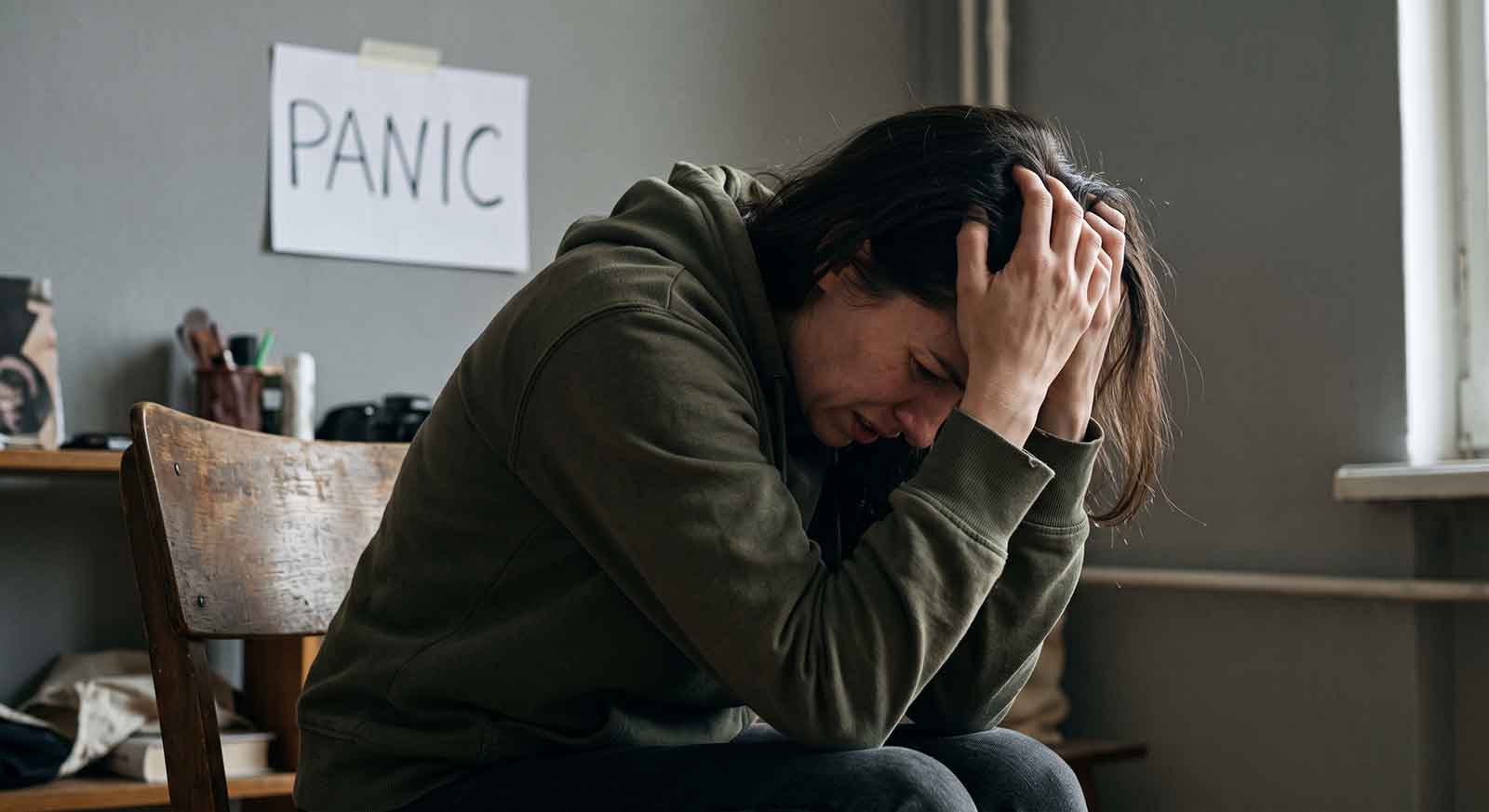
Panic attacks and anxiety attacks are frequently mistaken for one another by the people experiencing them, and that confusion is entirely understandable given how much their symptoms overlap. However, the difference between the two is well established in clinical practice and directly influences how effective treatment is designed.
Knowing which one you are dealing with removes the guesswork and opens the door to targeted support. Pacific Coast Therapy in Campbell and Santa Cruz specializes in making that distinction and matching each client with care built around their specific experience.
What Is a Panic Attack?
A panic attack is a sudden, intense surge of fear or physical discomfort. The American Psychiatric Association’s DSM-5-TR (the current diagnostic manual used by mental health professionals) formally recognizes panic attacks as a discrete clinical event, defined by a specific cluster of physical and psychological symptoms.
The experience typically includes several of the following symptoms occurring together:
- Rapid Heart Rate: The heart pounds or races intensely, often causing the person to fear a cardiac event.
- Shortness of Breath: Breathing becomes shallow or labored, which amplifies the sense of immediate danger.
- Chest Pain or Tightness: Physical pressure in the chest is common and is frequently mistaken for a heart attack.
- Dizziness or Lightheadedness: Hyperventilation or reduced blood oxygen levels can cause the person to feel faint or unsteady on their feet.
- Trembling or Shaking: The body’s fight-or-flight response triggers involuntary muscle responses throughout the body.
- Numbness or Tingling: A pins-and-needles sensation often develops in the hands, feet, or face during peak intensity.
- Fear of Losing Control: A pervasive sense of impending doom or fear of “going crazy” is one of the hallmark psychological features of a panic attack.
- Depersonalization (a feeling of being detached from your own body or surroundings): The person may feel disconnected from their physical self during the most intense phase of the episode.
Panic attacks are produced by the sympathetic nervous system (the body’s emergency activation system) releasing a rapid surge of adrenaline. Practicing stress management techniques during or after an episode can help activate the parasympathetic nervous system (the body’s calming system) and reduce symptom intensity.
Panic attacks can occur as isolated events or as part of a recurring pattern known as panic disorder (a condition involving recurrent, unexpected panic attacks followed by persistent worry about future episodes).
What Is an Anxiety Attack?
“Anxiety attack” is not a term formally recognized in the DSM-5-TR. It is widely used, however, to describe a prolonged period of escalating worry or dread in response to a specific stressor or perceived threat.
An anxiety attack typically includes several of the following sustained symptoms:
- Persistent Worry: Repetitive, difficult-to-control thoughts centered on a specific stressor or feared outcome that does not easily let go.
- Muscle Tension: Physical tightness in the shoulders, jaw, or neck that builds steadily alongside emotional distress.
- Restlessness: An inability to feel calm or settled, often described as a persistent sense of being “on edge.”
- Fatigue: Prolonged heightened alertness depletes energy, leaving the person feeling physically and emotionally drained.
- Difficulty Concentrating: Racing or intrusive thoughts make it difficult to maintain focus on any single task for an extended period.
- Irritability: Low tolerance for minor stressors is common when the nervous system has remained in a prolonged state of alert.
- Sleep Disruption: Trouble falling or staying asleep, often driven by unresolved worry cycling through the mind.
The experience is driven largely by cortisol, the body’s primary stress hormone, which accumulates gradually in response to ongoing perceived threats rather than spiking all at once.
For professionals across the San Jose and Silicon Valley area, where sustained workplace pressure is common, anxiety attacks are among the most frequent reasons adults seek support.
Working with an anxiety therapist can help identify the specific stressors fueling these episodes and build practical, individualized strategies to reduce their frequency and intensity.
How Do You Tell a Panic Attack from an Anxiety Attack?
Panic attacks and anxiety attacks share overlapping symptoms, which can make them difficult to distinguish in the moment. These are the defining differences between the two experiences:
- Onset: Panic attacks begin suddenly and without warning; anxiety attacks escalate gradually over time.
- Trigger: Panic attacks often occur without a clear cause; anxiety attacks are tied to a specific stressor or perceived threat.
- Duration: Panic attacks resolve within 20 to 30 minutes; anxiety attacks can persist for hours or days.
- Physical Intensity: Panic attacks produce severe, rapidly peaking physical symptoms; anxiety attacks involve milder, more sustained physical tension.
- Primary Experience: Panic attacks are dominated by acute physical sensations; anxiety attacks are centered on psychological worry and rumination.
- Aftermath: Panic attacks often leave the person feeling exhausted and shaken; anxiety attacks tend to ease gradually as the underlying stressor resolves.
The two experiences can also co-occur. A person managing chronic anxiety may experience a panic attack at the peak of a particularly stressful period. Seeking anxiety therapy in San Jose can provide the skills needed to prevent anxiety from escalating into a full panic episode.
How Are These Conditions Treated?
Panic attacks and anxiety attacks respond to different but overlapping therapeutic approaches. A clinical assessment determines the most appropriate path based on each person’s pattern and history.
Cognitive Behavioral Therapy (CBT) is the primary evidence-based treatment for both conditions. For panic attacks, CBT challenges the catastrophic interpretations of physical sensations that intensify the experience. For anxiety attacks, it restructures the chronic thought patterns driving prolonged worry.
Panic-specific treatment often incorporates interoceptive exposure (structured exercises that safely reproduce physical sensations like a racing heart or shortness of breath to reduce the fear response over time). This approach teaches the nervous system that these sensations, while uncomfortable, are not dangerous.
DBT (Dialectical Behavior Therapy) builds distress tolerance and emotional regulation skills that are particularly useful for managing the prolonged stress cycles associated with anxiety attacks.
When panic or anxiety traces back to a specific traumatic experience, EMDR (Eye Movement Desensitization and Reprocessing) addresses the underlying trauma driving the symptom pattern.
IFS (Internal Family Systems) may also be incorporated when anxiety or panic connects to deeper internal conflict or self-critical thought patterns.
Pacific Coast Therapy Can Help
Panic attacks and anxiety attacks are treatable, and you do not have to work through them on your own. Pacific Coast Therapy serves adults, teens, and families from our Campbell and Santa Cruz offices, with San Jose and the broader Silicon Valley area within our service reach and online sessions available across California.
A complimentary 15-minute consultation is the first step toward getting matched with a therapist who fits your specific needs and goals.
FAQs
Can a Panic Attack Last for Hours?
A single panic attack typically peaks within 10 minutes and resolves fully within 20 to 30 minutes. What often feels like a prolonged attack is usually a series of back-to-back episodes or a sustained period of elevated anxiety between events. If intense physical symptoms persist for more than 30 minutes, seeking a medical evaluation is recommended to rule out other underlying causes.
Are Panic Attacks Dangerous to Your Physical Health?
Panic attacks are not physically dangerous, though the symptoms can feel life-threatening in the moment. The body’s stress response system produces the chest pain, a racing heart, and shortness of breath, and these are not signs of an underlying cardiac or respiratory condition.
Recurring panic attacks can, however, significantly disrupt daily functioning and quality of life, which makes professional support worth pursuing.
What Triggers an Anxiety Attack?
Anxiety attacks are typically triggered by identifiable stressors such as work pressure, relationship conflict, financial concerns, or anticipatory worry about a specific upcoming situation. In some cases, accumulated stress builds to a tipping point over time, with no single trigger easy to identify. A therapist can help map individual patterns and build a targeted response strategy around them.
Can Anxiety Attacks Develop Into Panic Disorder?
Anxiety attacks and panic disorder are distinct experiences, but chronic and unmanaged anxiety can increase the likelihood of experiencing panic attacks over time.
Panic disorder is diagnosed when recurrent, unexpected panic attacks are followed by persistent worry about future episodes or meaningful changes in daily behavior. Early intervention with a mental health professional can help reduce the likelihood of this progression.
Is Therapy Effective for Panic Attacks and Anxiety Attacks?
Yes. Cognitive Behavioral Therapy (CBT) is one of the most well-researched treatments for both conditions, with a strong evidence base supporting reductions in the frequency and severity of episodes.
Additional approaches such as DBT, EMDR, and IFS may also be incorporated depending on the individual’s clinical history and presenting needs. Most people experience meaningful improvement within a structured course of therapy.
Do Panic Attacks and Anxiety Attacks Require Different Treatment Approaches?
They often do. Panic attacks, particularly when recurrent and unexpected, are frequently addressed through exposure-based techniques and interoceptive awareness training (structured exercises that reduce the fear of physical sensations like a racing heart or shortness of breath by safely reproducing them in a controlled setting).
Anxiety attacks tied to specific stressors tend to respond well to cognitive restructuring (identifying and reframing the thought patterns that fuel anxiety) and stress regulation strategies. A thorough clinical assessment helps determine the most appropriate therapeutic direction for each individual.
How Do I Know If I Need Therapy for My Panic or Anxiety Episodes?
Therapy is worth considering if episodes occur frequently, interfere with work or relationships, or lead you to avoid situations you would otherwise engage in. You do not need to be in crisis to benefit from professional support.
Even occasional episodes that leave you feeling unsettled or confused about what happened are a reasonable basis for speaking with a mental health professional.